
The Let’s Read initiative, driven by The Asia Foundation, seeks to provide accessible, high-quality children’s books translated into local languages. The program empowers volunteers to translate, adapt, and share these books to promote literacy in underserved communities. In the Maldives, Let’s Read focuses on increasing the availability of Dhivehi-language children’s literature, ensuring young readers have access to culturally relevant and linguistically appropriate resources. By working closely with librarians, teachers, and volunteers, the program fosters a love of reading in children while supporting local language preservation and literacy skills. As of August 2024, there are 197 Let’s Read books in Dhivehi language, 191 are translations and 6 originally written in Dhivehi.
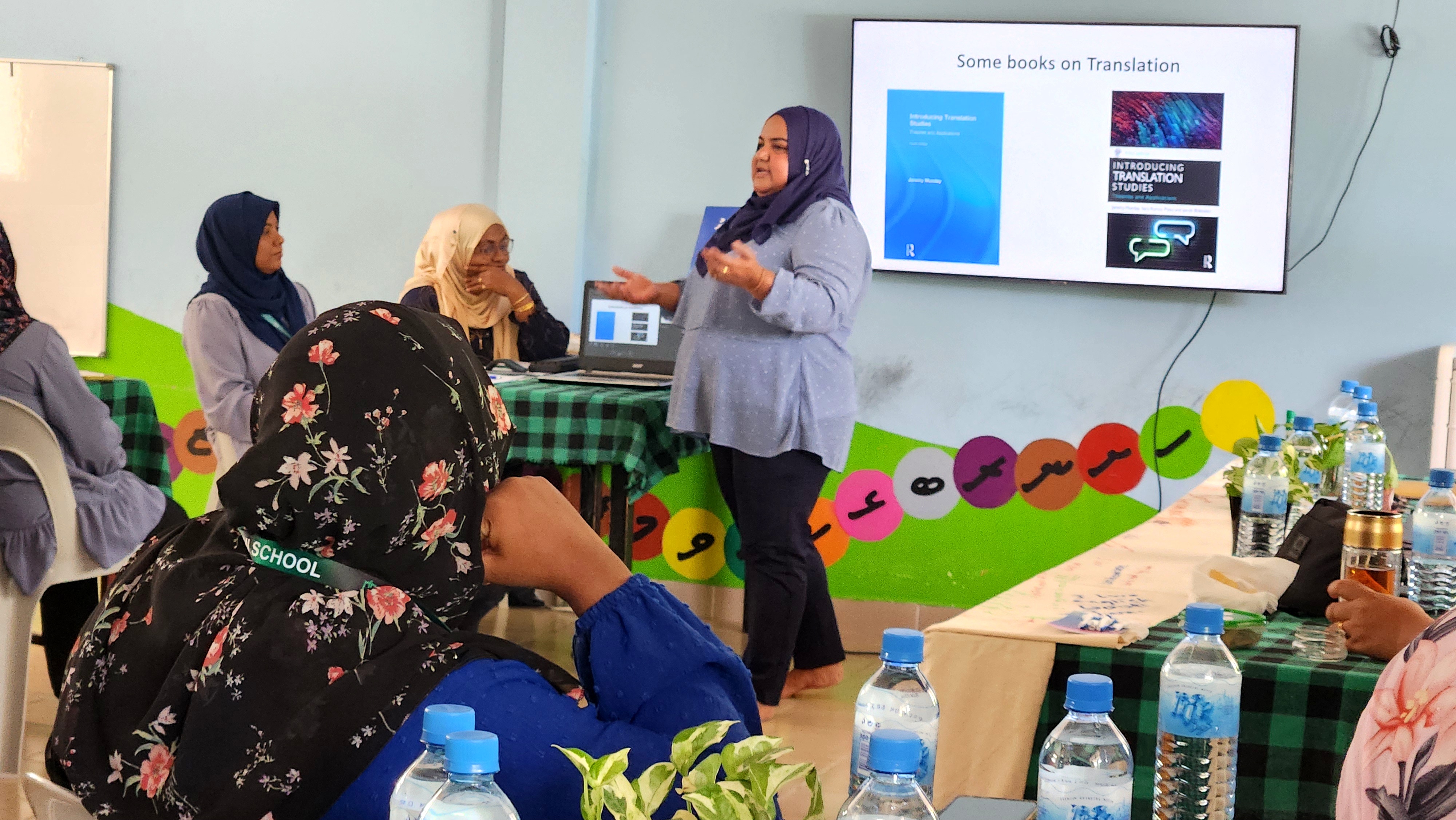
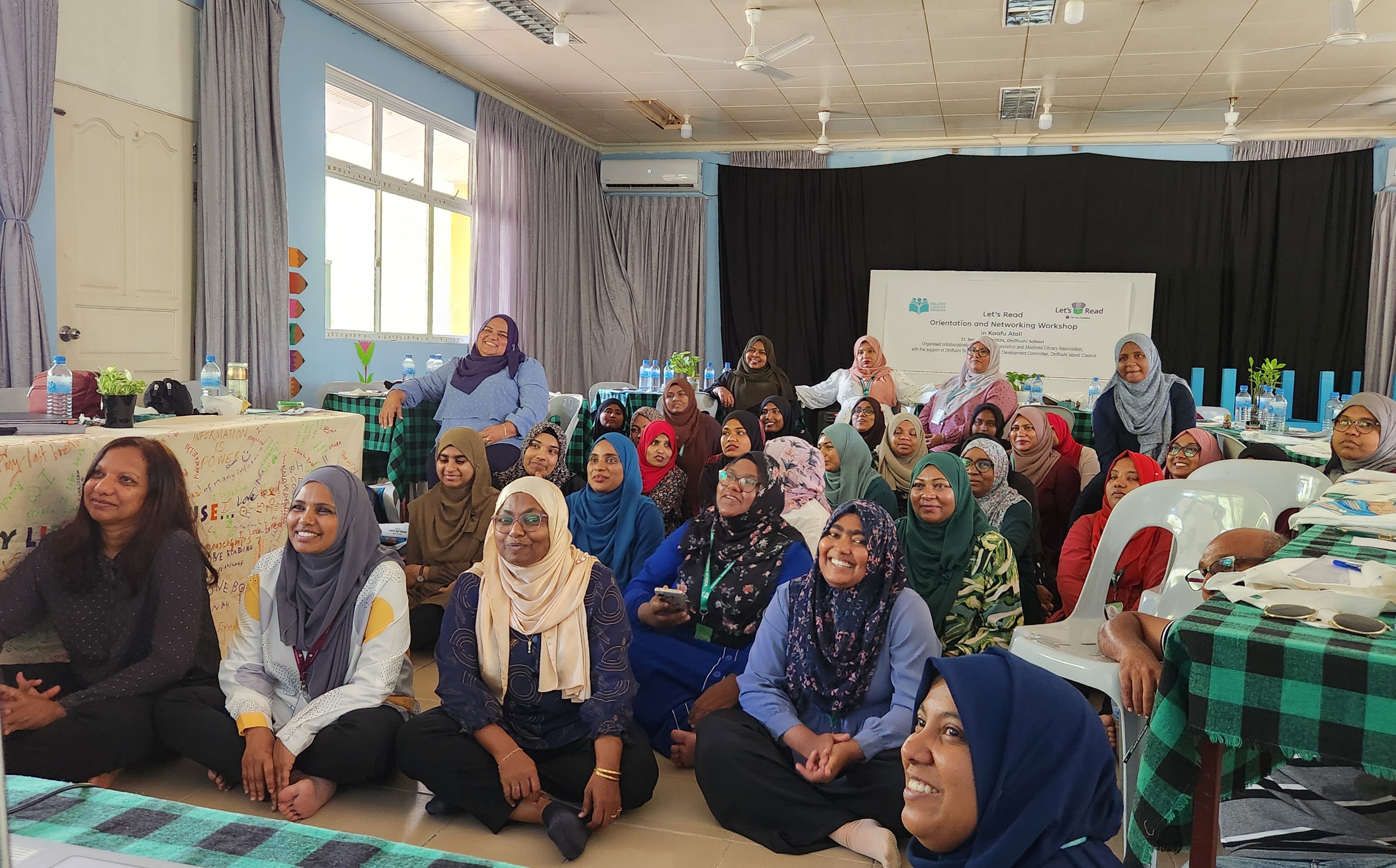
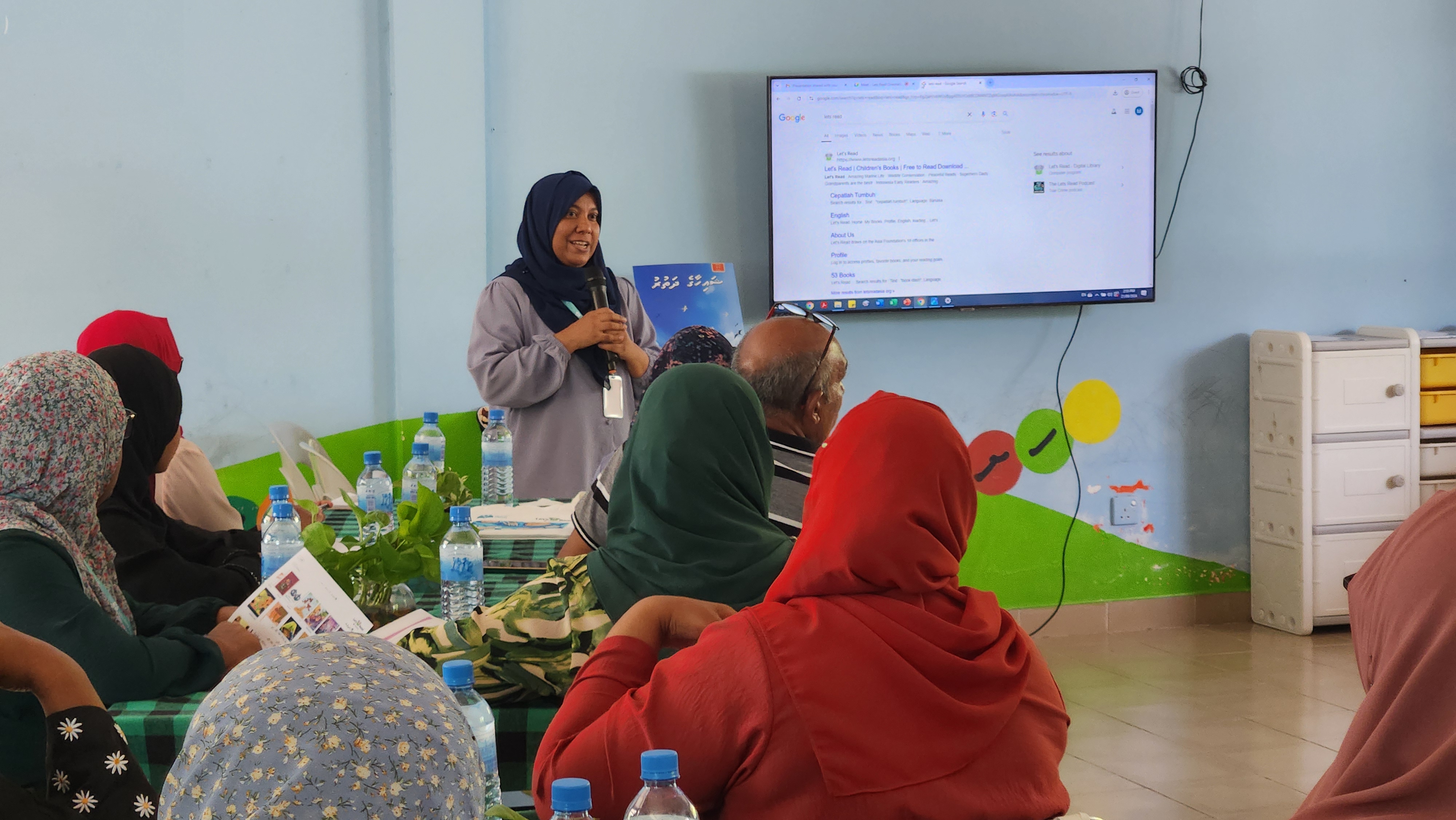
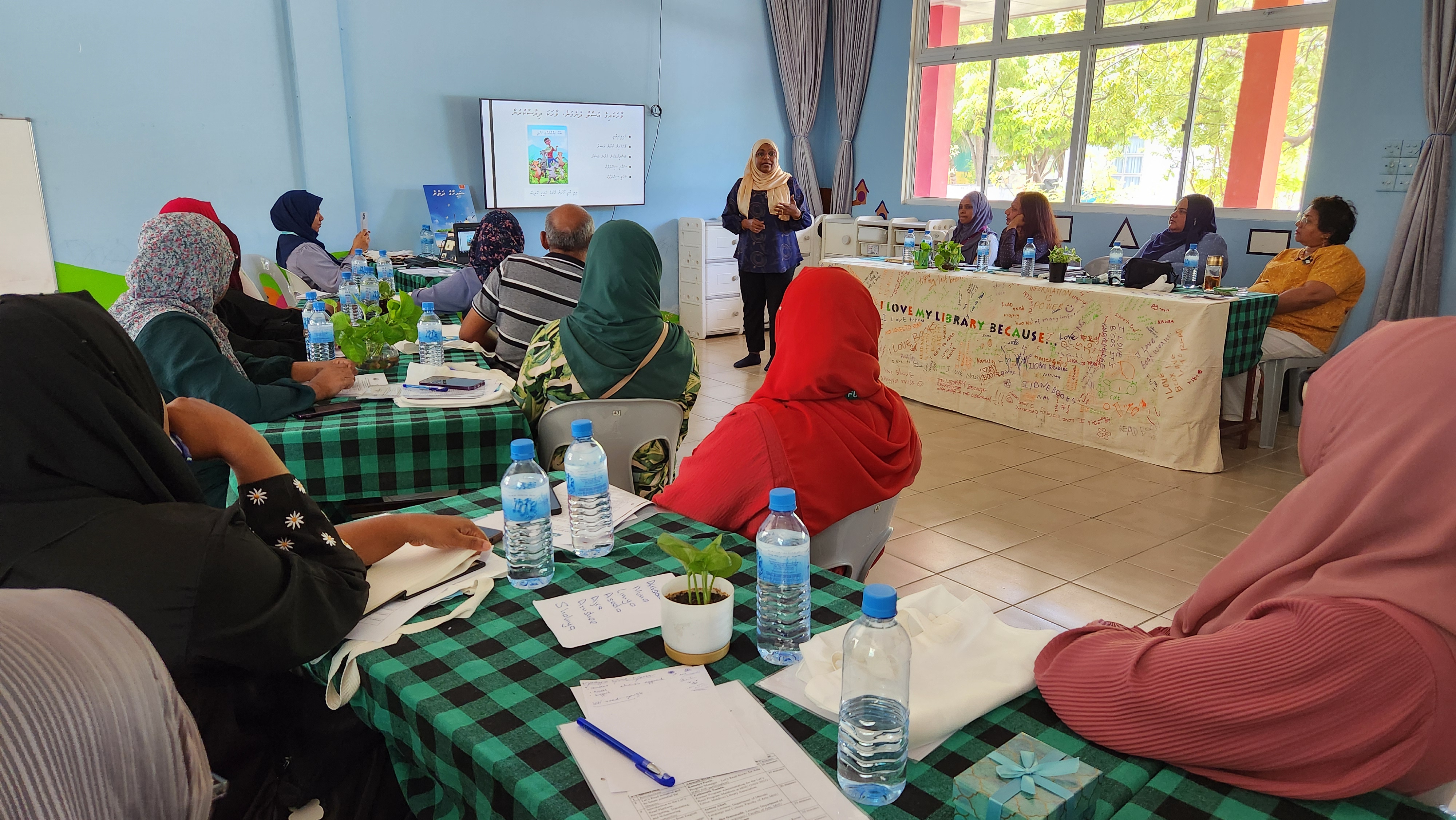
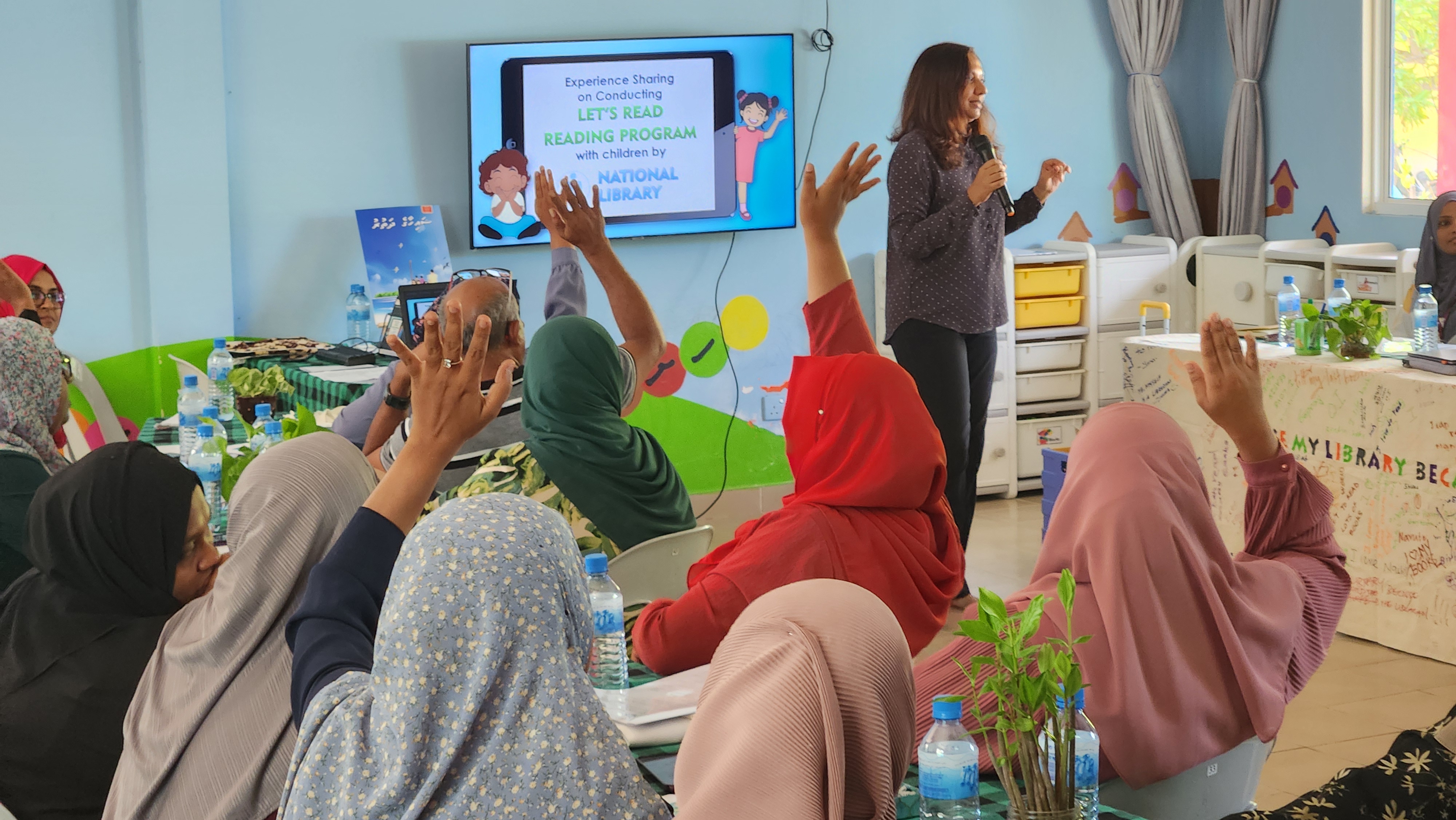

During the workshop held on 21 September 2024, 39 participants consisting of librarians and teachers from 7 islands and 20 schools across Kaafu Atoll, along with representatives from the Maldives National University (MNU) and National Library –which also serves as a public library – came together in Kaafu Dhiffushi School to discuss the Let’s Read program’s future potential for libraries and children’s literacy.
Kanniya Pieris, the Program Manager for Let’s Read Books for Asia, participated online and discussed the initiative’s future potential for libraries across the country and impact on children’s literacy. Participants were introduced to the program, platform navigation, and translation opportunities by former Administrator of Let’s Read platform in the Maldives, Fathimath Nashfa. Azeeza Afeef and Aaidha Hammadh, lecturers from the Department of Dhivehi Language and Culture and the Department of Foreign languages, at MNU, provided insights on maintaining proper language structure and cultural adaptation when translating from English to Dhivehi.
Fathimath Shiham, Director General of the National Library, shared how the Let’s Read program was conducted across the Maldives via Zoom during the COVID-19 pandemic, with significant participation from people across the country. This virtual format allowed the program to reach a wide audience and continue promoting literacy during challenging times.
The workshop also explored strategies for effectively engaging young readers, particularly through read-aloud sessions. Aishath Yooliya Haleem, a passionate reader from the Reading Room, delivered an engaging workshop for librarians and primary school teachers on how to captivate young readers through storytelling. She even read a story aloud for the participants, making the session both fun and enjoyable.
The event moderated by Aminath Riyaz concluded with a discussion on increasing Dhivehi-language children’s books and sought commitment to regular reading sessions across schools, reinforcing the project’s impact and paving the way for future contributions from the librarian and teacher community.
The workshop mobilised support from the Women’s Development Committee of Dhiffushi Island Council, Dhiffushi School (the only primary and secondary school on the island) and Fikree Preschool. The Kaafu Atoll, with a population of less than 13,000 people, consists of 9 inhabited islands, of which 7 islands were represented at the workshop.
 Maldives Library Association